One VAT return, start to finish

Meet Mela Ltd, a marketing company in Malta. Its director, Zeppi Zurzieqa, is a lovely man who has never sent a document on time in his life. Mela’s accounts are handled by Uwejja & Associates. The firm is short-staffed, so Mexxi Hanlestu, its managing partner, handed Zeppi’s VAT returns to one of his laziest employees, Skansa Facendi.
Skansa always does the bare minimum needed to get the job done and wants to automate as much as possible. She cannot stand emailing Zeppi for his invoices, emailing him again a week later, digging the attachments out of her inbox, renaming them, saving them in the right folder, and then discovering that one of the invoices he sent is a proforma, is missing a VAT number or has the wrong date. She went on Google looking for something that would do the chasing for her, and she found Ziffa.
Convincing Mexxi took one meeting. He never knew who was working on what or which clients still owed documents, and he was tired of reminding his staff to remind their clients. So the two of them sat down with Andrew, Ziffa’s CEO, and Daniel, Ziffa’s CTO, and a few weeks later the firm’s services, deadlines and folders were set up in Ziffa.
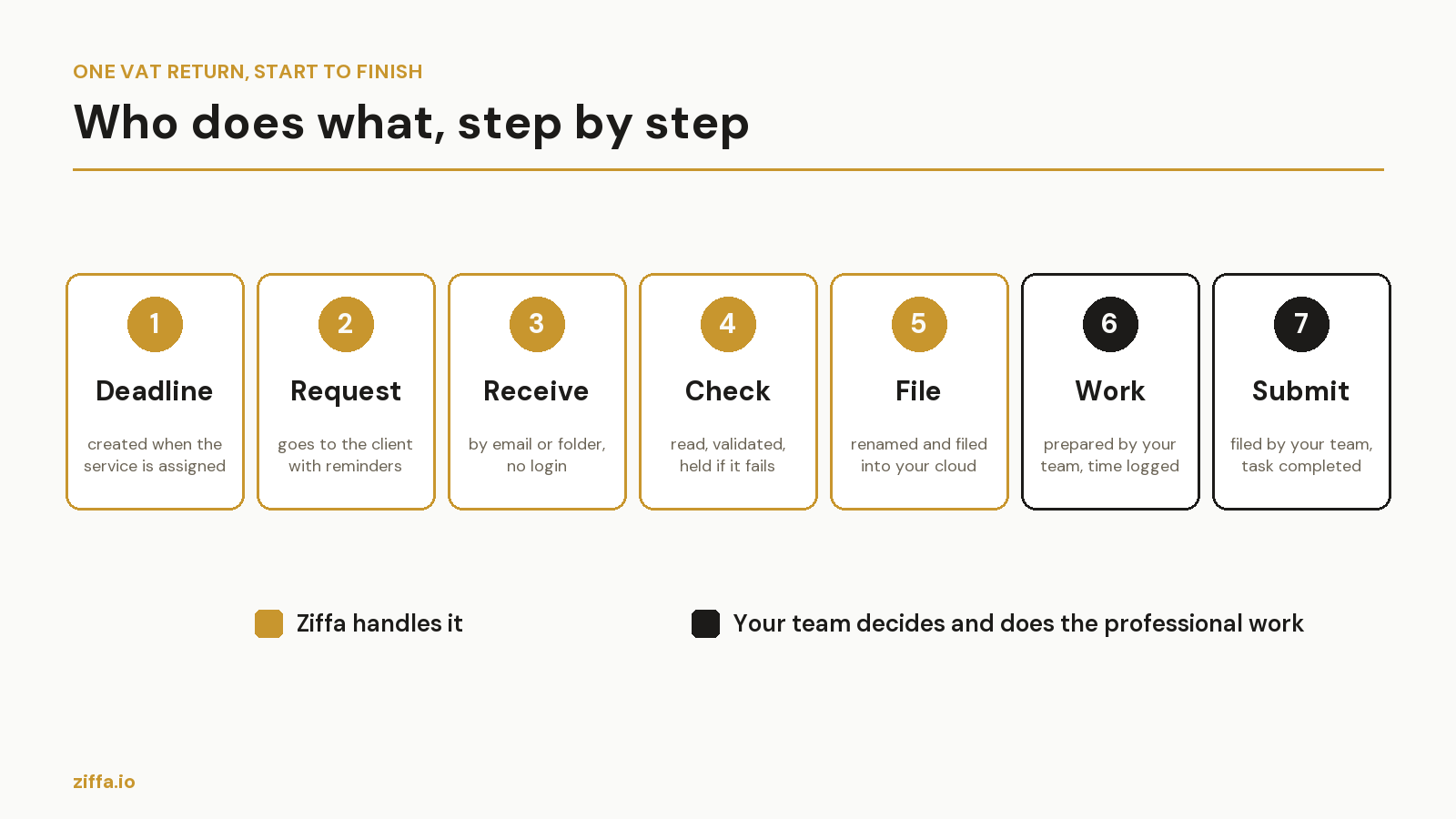
1. The job creates itself
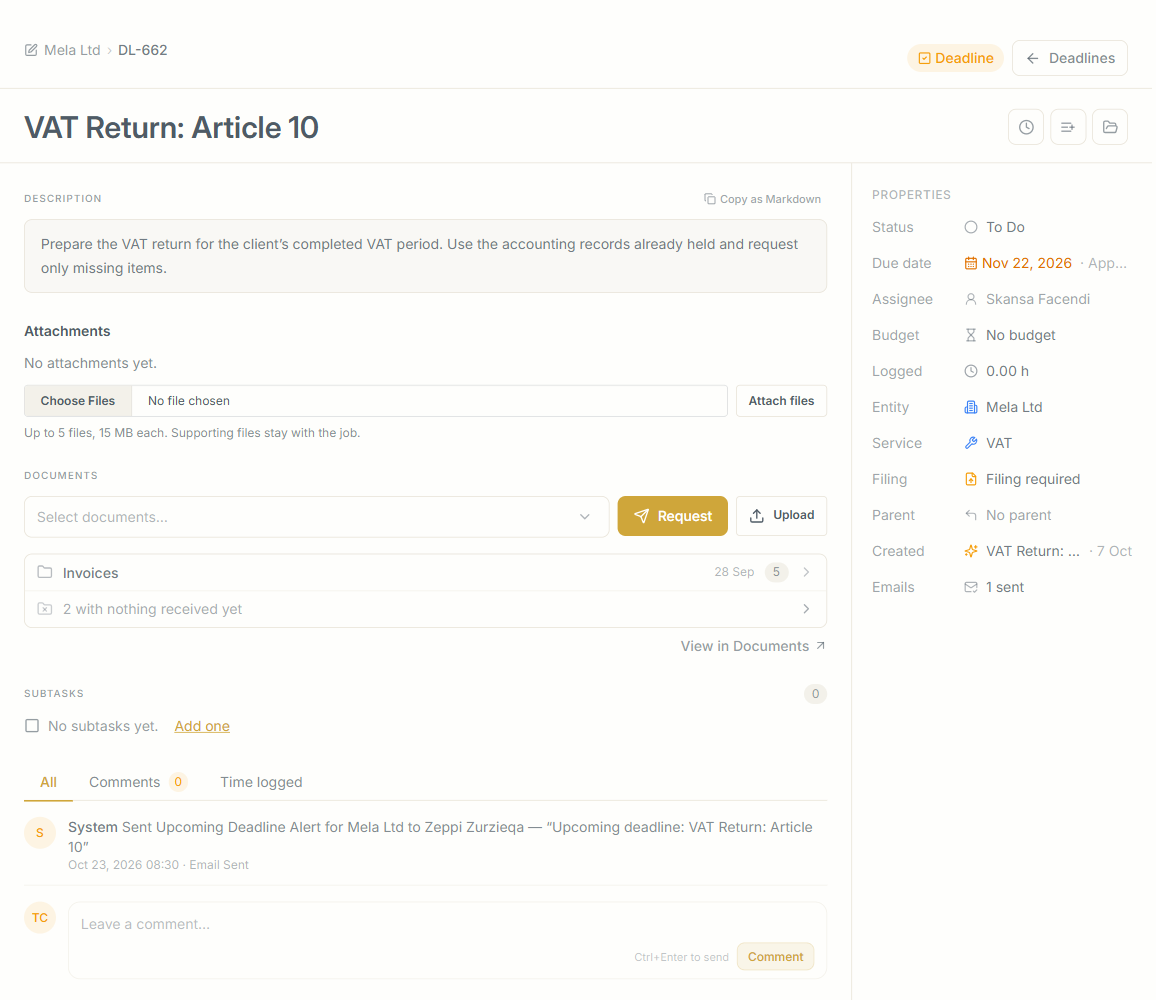
When the firm took Mela on for VAT, Ziffa created every VAT return job for the next 12 months, each with its due date. Nobody had to remember that this quarter’s return, due on 22 November, was coming. Mexxi added Skansa to Mela Ltd’s team and assigned her the job, and Ziffa emailed her to say so. Skansa read the email and decided the job could wait.
Mexxi also saved a view of Skansa’s open jobs, so he could check on her without having to ask.
2. The request goes out on its own
This is the part Skansa used to dread, and this quarter she didn’t write a single email. Thirty days before the deadline, Ziffa emailed Zeppi a list of exactly what the return needed: his bank statements, invoices and receipts, with a button to open his shared folder.
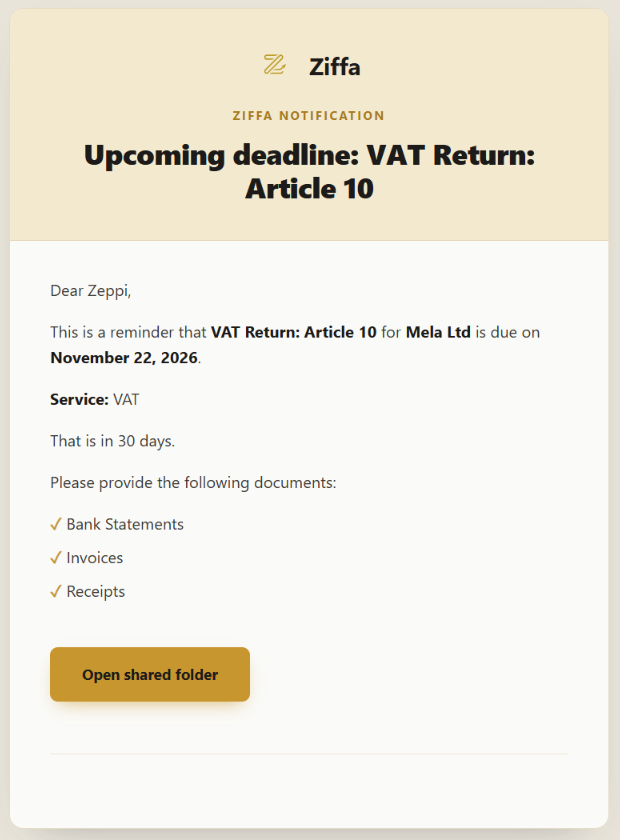
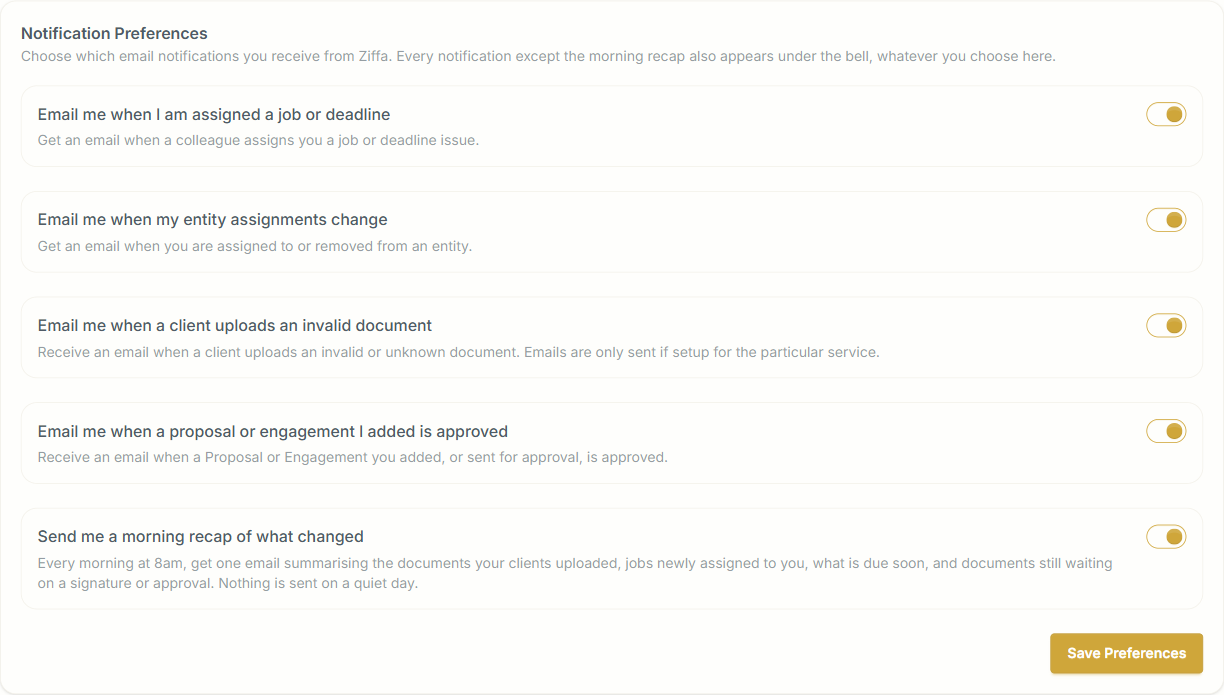
Zeppi didn’t reply, of course. Ziffa reminded him again 15 days before the deadline, and once more seven days before. Skansa, meanwhile, kept the morning recap on: one email at 8am with everything her clients uploaded the day before, any new jobs assigned to her, and what’s due soon. Reading one email a day was a workload she could live with.
3. Zeppi sends whatever he has
After the third nudge, Zeppi finally opened the email. He forwarded a bank statement by email and dropped a zip of invoices and receipts into the folder Mela shares with Uwejja & Associates.
4. Ziffa reads and checks every file
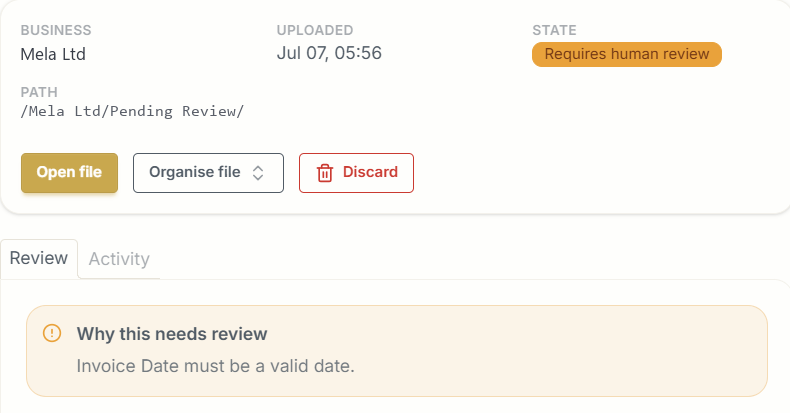
Ziffa picked up every file Zeppi sent, whether it came by email or through the shared folder, and unpacked the zip so each document inside was handled on its own. It worked out what each document was, read its details and then checked them. One of Zeppi’s invoices had no date on it, so instead of being filed, it went to Pending Review with the reason written down. Because the firm had switched on invalid-upload alerts for VAT, Skansa got an email about it straight away, which annoyed her a little.
5. Everything else is renamed and filed
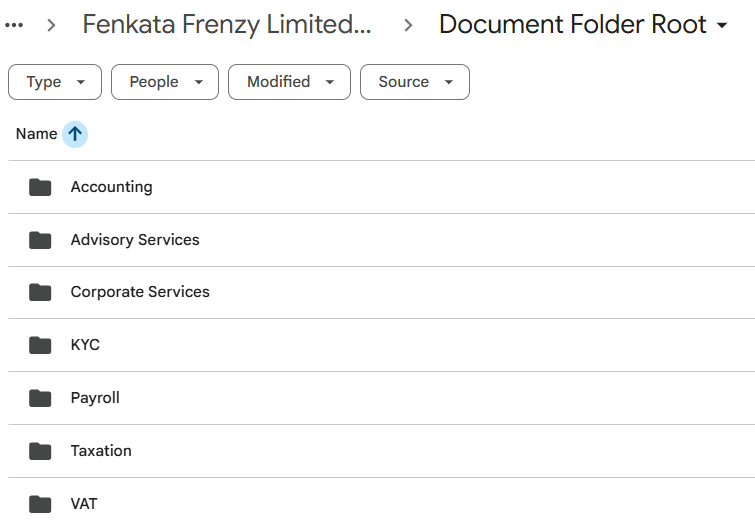
The rest were renamed by the firm’s rules and filed into the firm’s own Google Drive, under Mela Ltd, in the folder structure Uwejja & Associates chose. One document that arrived as document_pdf (6).pdf now has a name anyone in the office can find, built from the document type, supplier, customer, invoice number and date: INVOICE - AQTALI PARTNERS - MELA LTD - INV43 - 03092026.pdf.
Each document also appeared inside the VAT job, grouped by type, with a count of what still hadn’t arrived. The next morning’s recap told Skansa the documents were in. She hadn’t opened a single email attachment.
6. Skansa does the bit only she can do
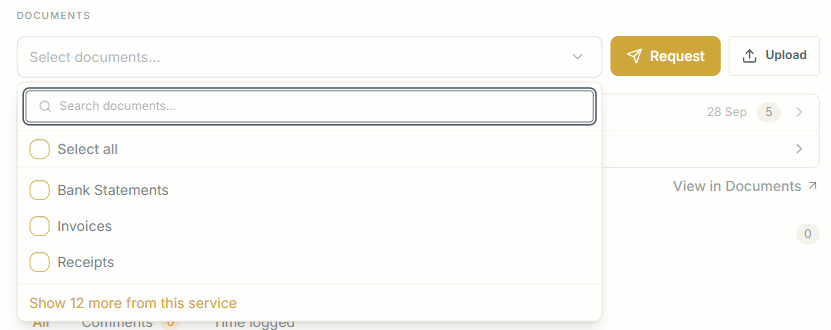
Skansa opened the job. From the Documents section she picked Invoices, added a line asking Zeppi for a dated copy of the Zizi invoice, and pressed Request. Ziffa emailed him and recorded the request on the job. She moved the job to On Hold and went for a coffee.
The dated invoice arrived two days later and showed up in her morning recap. She moved the job back to In Progress, prepared the return and logged her 45 minutes against the job. Then she assigned it to Mexxi with a comment saying it was ready for review. Ziffa emailed Mexxi. He checked the figures, left a comment and handed the job back to Skansa.
7. Submitted and closed
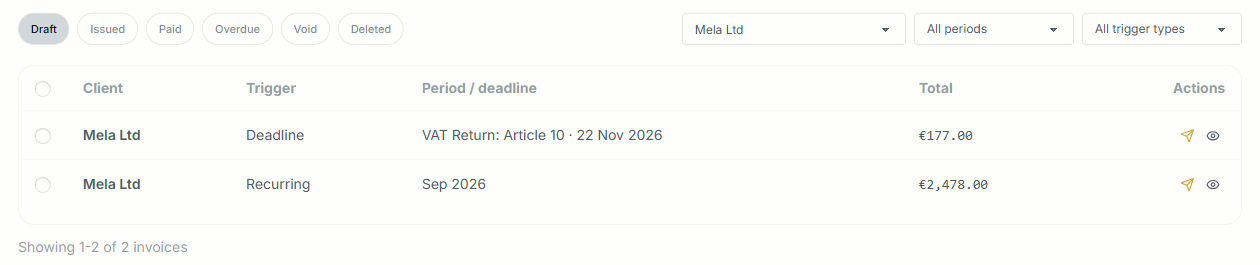
Skansa submitted the return to the MTCA the way she always had, attached the confirmation to the job and marked it Completed. The fee for the return had already been drafted in Ziffa’s billing a month before the deadline, so Mexxi only had to review it and issue it through Xero.
Every document behind the return stays filed, and the job keeps a record of when each one arrived, who asked for what, and how long the work took. In the year view, Mela’s third quarter now shows as done.
Count what Skansa did
Read the steps again. Skansa looked at one invoice, asked for one fix, prepared the return, logged her time and submitted it. Ziffa did the asking, the chasing, the sorting and the filing, and the outbox shows exactly when Zeppi was asked and reminded. Mexxi knew where the job stood at every step without having to ask anyone.
Now picture that across every VAT client this quarter, and every Skansa in your office.
Book a walkthrough and we’ll run one of your own services through these seven steps, with a client as reliable as Zeppi.